Course Description
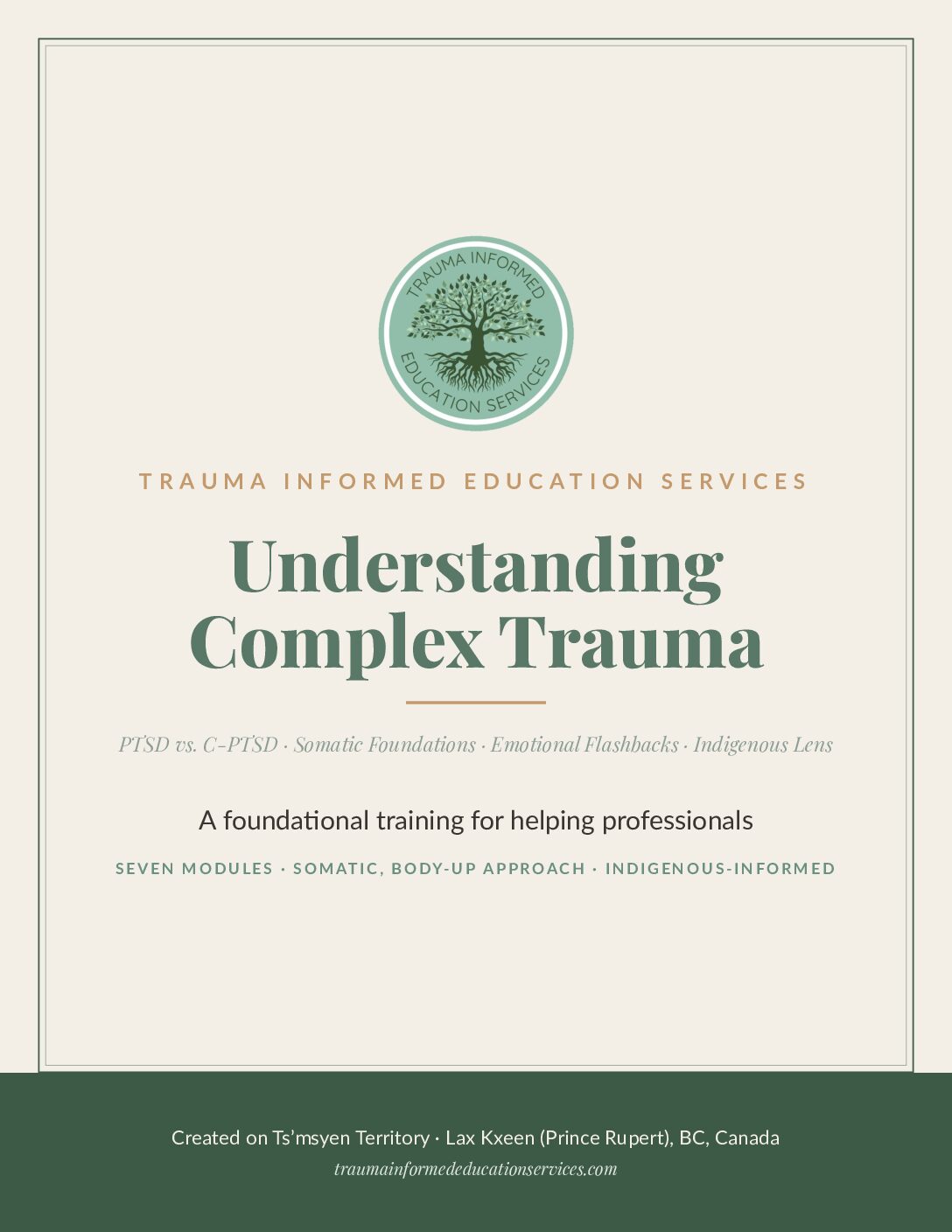
Understanding Complex Trauma is a professional development course for clinicians and helping professionals who want to better understand C-PTSD, emotional flashbacks, somatic foundations, and the importance of working with complex trauma through a relational, body-based, and Indigenous-informed lens.
This course introduces the clinical distinction between PTSD and C-PTSD, explores the moral defence and what can get missed clinically, and offers a body-up approach to understanding complex trauma. Learners will also explore emotional flashbacks, Indigenous clients and intergenerational trauma, clinical tools, cautions, and grounding practices.
The course includes video lessons, guided workbook reflection, somatic practices, and downloadable participant materials.
- Recognize the key clinical differences between PTSD and C-PTSD
- Understand the three Disturbances in Self-Organization: affect dysregulation, negative self-concept, and disturbances in relationships
- Identify how emotional flashbacks may show up as shame, shutdown, rage, fawning, avoidance, or what gets called resistance
- Understand why complex trauma often needs a slower, more relational, body-based approach
- Apply a somatic lens to complex trauma, including nervous system tracking, titration, pendulation, and grounding
- Recognize how the moral defence can shape shame and negative self-concept in C-PTSD
- Bring an Indigenous-informed lens to intergenerational trauma, colonial harm, cultural safety, and land-based grounding
- Use practical tools, reflection prompts, and clinical language to support trauma-informed practice
- 92 minutes of video instruction
- 34 Page Participant Workbook
- Module transcripts for accessibility
- Somatic grounding and reflection practices
- Pete Walker’s 13 Steps for Managing Emotional Flashbacks
- Somatic Tools Reference
- Recommended Resources reading list
- Certificate of completion available by request
- No prior knowledge of C-PTSD is required
- This course is for professional education and reflection, not clinical supervision or therapy
- Move at your own pace and pause the videos whenever you need more time with the workbook
- Some material discusses trauma, colonial harm, emotional flashbacks, shame, and nervous system survival responses
- Please tend to your own nervous system as you move through the course
- Use the workbook for personal reflection only and avoid including identifying client information
- Therapists, counsellors, and social workers
- Trauma-informed coaches and somatic practitioners
- Helping professionals who support clients with complex trauma
- Clinicians who want to better understand C-PTSD, emotional flashbacks, and nervous system-based trauma responses
- Professionals working with Indigenous clients or clients impacted by intergenerational trauma
- Educators, frontline workers, and community support workers seeking a trauma-informed foundation